
ESOS Phase 4 asks what you actually saved. Can your estate answer in kWh?

The board signed off the HVAC schedule change in March. The bill came down. Now the lead assessor wants to know how much of that fall was the schedule change, in kilowatt hours, separated from the mild spring, the two store closures and the tariff renewal. Across 300 sites, on monthly invoices, there is no honest answer.
There is a plausible answer. Most estates will produce one. It will be built backwards from a total, apportioned by floor area or trading hours, and presented with a footnote about assumptions. It will pass, probably. But it is a reconstruction, not a measurement, and the difference between those two things has just been written into the scheme.
The gap is not a reporting problem. It sits in the metering, and it takes months to close.
What changed on 30 July 2026, and why it lands on your metering
The Environment Agency published its Phase 4 guidance on 30 July 2026, reflecting the Energy Savings Opportunity Scheme (Amendment) Regulations 2026 - SI 2026/701, in force from 22 July 2026.
The change that matters commercially is not the deadline. It is what the report has to contain. The ESOS report and the notification of compliance must now include details of the energy savings achieved during the compliance period: a description of each measure implemented, the level of energy saving achieved by each measure, and the energy saving category it falls into. Only the combined figure across all measures is published; the individual measure savings are withheld as potentially commercially sensitive.
Alongside it sits an action plan review. Where a measure was proposed and not implemented, you state which, and why.
Read those two requirements next to each other and the shift is obvious. Earlier phases asked what an estate could do. Phase 4 asks what it did, what each thing delivered, and what happened to everything it chose not to do. The first is an audit question. The second is a measurement question, and measurement happens at the asset, not at the invoice.
Two dates frame the work. Qualification is assessed on 31 December 2026. The compliance deadline is 5 December 2027. The Environment Agency's own advice is to begin 12 to 18 months before the deadline, which places the honest start date somewhere around now.
Display Energy Certificates and Green Deal Assessments have also been removed as compliance routes. Estates that leaned on DECs for part of their coverage are now inside the audit or ISO 50001, whether they had budgeted for that or not.
Why site-level billing cannot evidence a per-measure saving
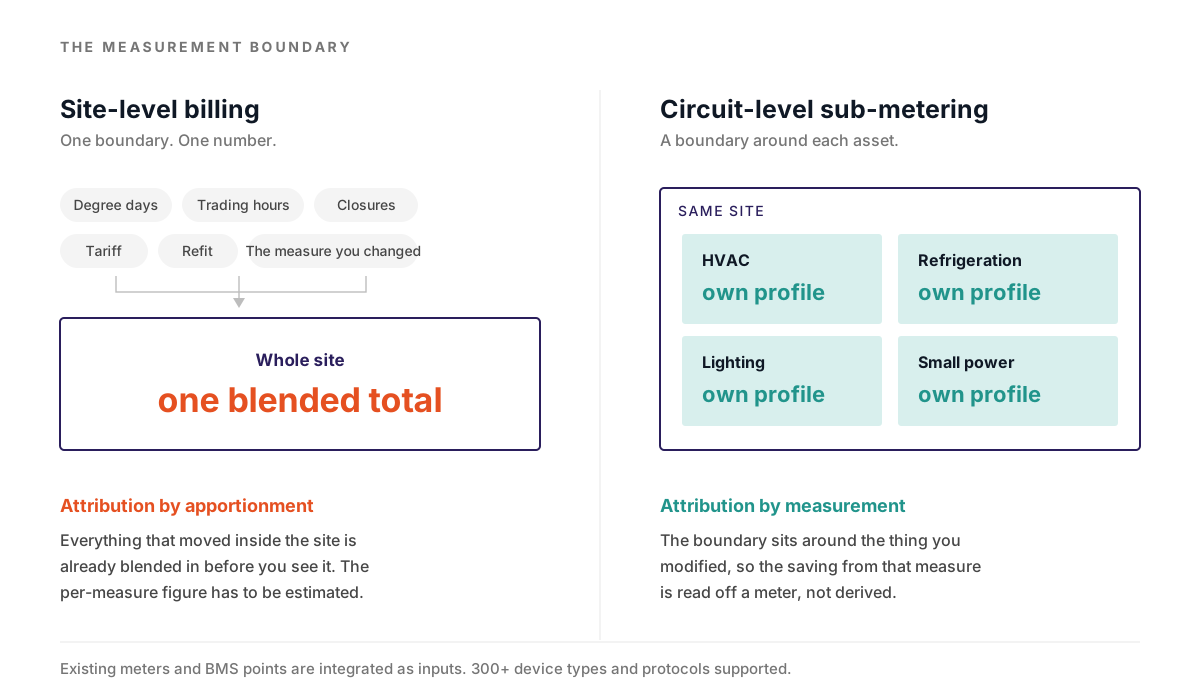
A monthly invoice is one number for a whole site. Everything that happened inside that site during that month is already blended into it before it reaches you.
Consider what moved in the same period as your HVAC schedule change. Degree days. Trading hours. Two closures and a refit. A tariff renewal. Occupancy, if you run retail. Any one of those can move a site total by more than the measure did. Isolating the measure from a blended total is not analysis, it is apportionment, and an assessor reading a per-measure saving derived by apportionment is reading an estimate.
Half-hourly data at the fiscal meter improves this and does not fix it. It tells you the site's consumption profile changed, and roughly when. It does not tell you which asset changed. Attribution needs the measurement boundary to sit around the thing you modified - the HVAC circuit, the refrigeration pack, the lighting board.
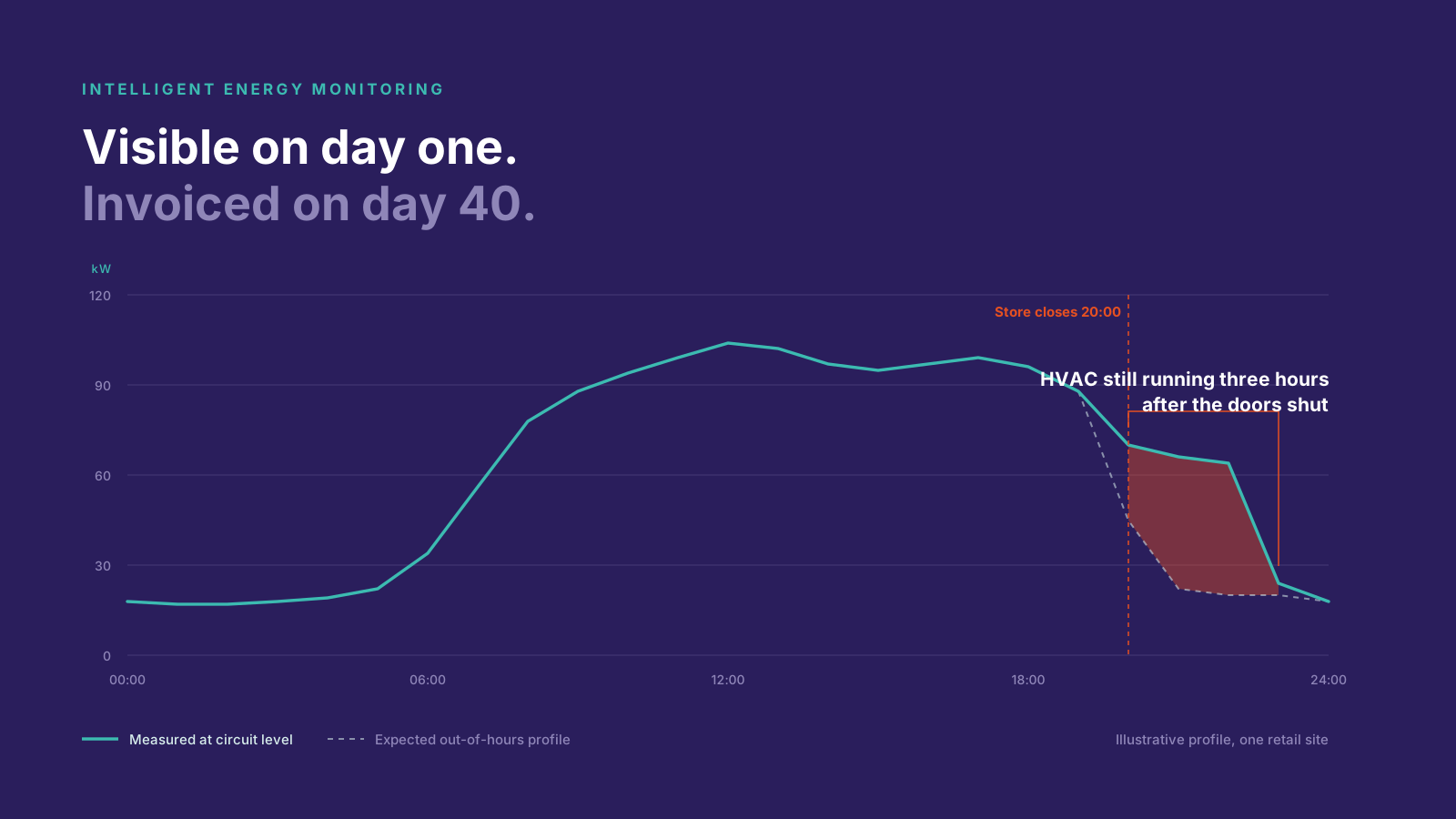
Take the overnight HVAC run as the test case. Three hours past close at a single site is a figure most estates can estimate to within ten per cent from the plant schedule alone. Multiply it by 300 sites and 200 trading days and it becomes one of the largest lines in the action plan. Then try to evidence what fixing it saved, per site, from a monthly bill. The measure is real, the saving is real, and the evidence does not exist.
Outcome: attribute the saving to the measure, not to the invoice
The problem it solves. The HVAC schedule change worked. Nobody can prove how much of the bill reduction it caused, because the only measurement boundary is the whole site.
What changes:
- Consumption measured at circuit level, so HVAC, refrigeration and lighting are separated before anything is analysed
- A pre-measure baseline and a post-measure profile for the same asset, on the same boundary
- Weather and trading-hour effects visible as their own patterns rather than blended into a single total
The outcome. A per-measure kWh figure that came from a meter, with the before-and-after profile behind it, rather than a total apportioned after the fact.
Deployment reality: day 60 across a 300-site estate.
Solution: Intelligent Energy Monitoring.
Sub-metering stops being an energy project and becomes compliance evidence
For most estates, sub-metering has spent a decade losing internal budget arguments. It competes against refrigeration replacement and LED retrofit, which is an unwinnable comparison, because those measures save energy and metering only measures it. That comparison no longer holds. Sub-metering is now the evidence layer underneath a statutory return, and it is the only measure in the action plan that makes every other measure defensible.
That reframing matters for how the spend gets approved. It moves the business case from energy budget to compliance and reporting, where the alternative is not "no saving" but "no evidence".
The return stands up on its own regardless. £1.2m in proven energy cost reduction for major retail portfolios, against a payback period of three to six months. The same data set produces the 800 tonnes of CO₂ removed per year that SECR reporting is already asking for, from one deployment rather than two.
Two things make this affordable inside a four-month window. Existing assets are integrated rather than replaced — where there are already meters, BMS points or half-hourly feeds, those become inputs, not write-offs. And with 300+ device types and protocols available, the device is chosen per environment rather than per supplier contract, which is what keeps a mixed estate from turning into a rip-and-replace programme.
The commercial structure flexes too. OpEx lease if the CapEx approval will not clear committee before December. CapEx purchase if the lower long-term total cost of ownership matters more. That decision belongs to finance, not to a vendor licensing model.
Outcome: see the HVAC overrun on the day it happens, not 40 days later
The problem it solves. The overnight run showed up in the monthly invoice. By the time it was visible it had repeated across the estate for five weeks.
What changes:
- Consumption anomalies flagged against the site's own load profile, on the day they occur
- The alert routed into your existing CAFM as a work order rather than an email to a shared inbox
- Repeat offenders identifiable by site and by asset, so the fix is targeted rather than estate-wide
The outcome. The overrun is corrected in days, and the correction is measured — which means it counts as an implemented measure with a number attached, not a maintenance note.
Deployment reality: anomaly detection live from day 90.
Solution: Intelligent Energy Monitoring.
The four months between now and the qualification date
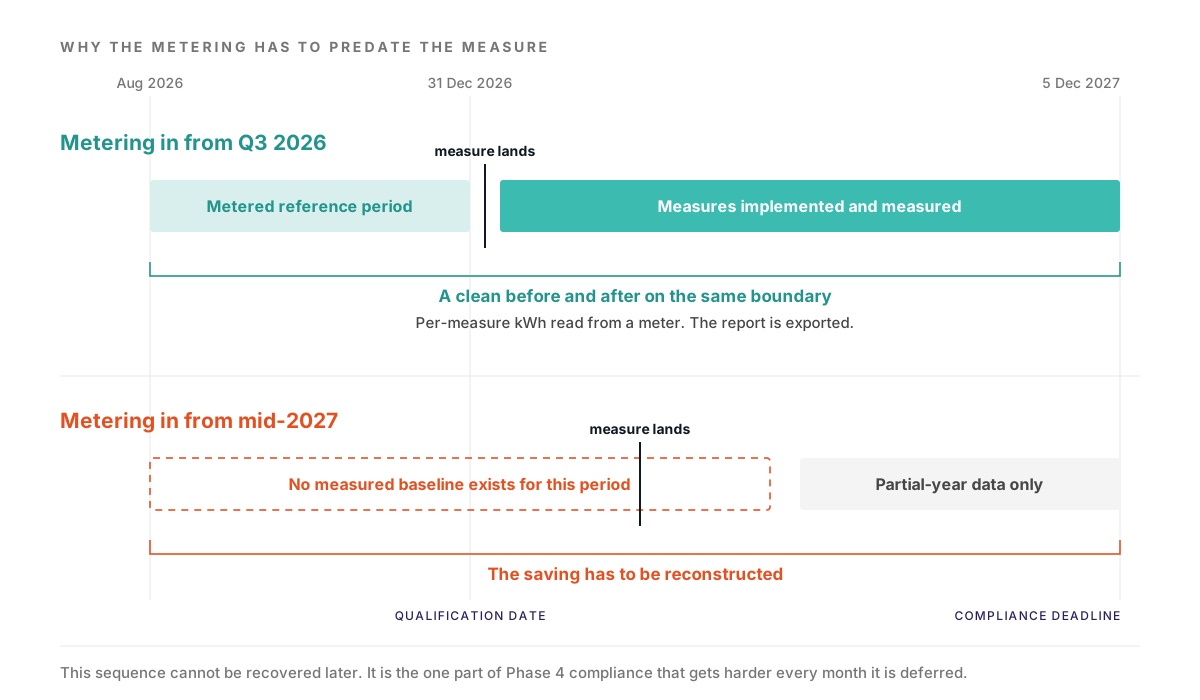
Here is the timing problem, and it is the reason this is an August decision rather than a 2027 one.
A per-measure saving needs a baseline that predates the measure. If the metering goes in during 2027 and the measure lands in the same year, there is no clean before. You have a partial-year profile, a partial-year comparison, and an assumption bridging the two - which returns you to reconstruction, on a shorter runway, with the deadline closer.
Metering installed now produces a full reference period before the measures that will be reported. That sequence cannot be recovered later. It is the one part of Phase 4 compliance that gets strictly harder every month it is deferred, and it is the part that no consultancy engagement in late 2027 can retrofit.
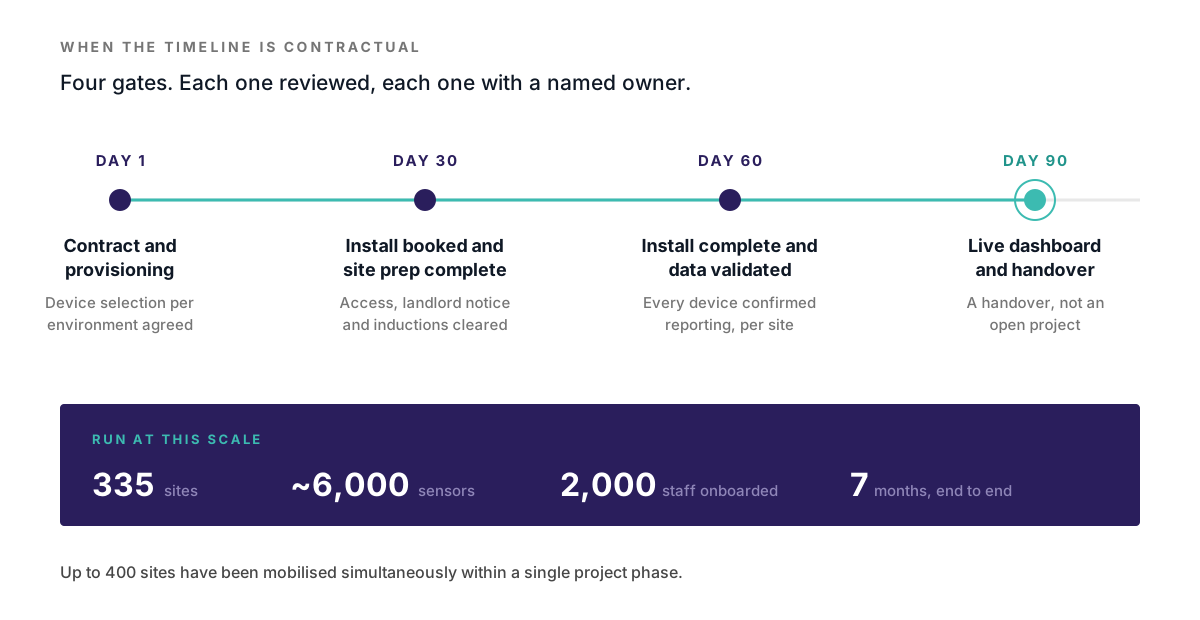
The deployment itself is not the long pole. Day 1 is contract and provisioning. Day 30, install booked and site prep complete. Day 60, install complete and data validated. Day 90, live dashboard and handover. Across a 335-site estate, BunchTech has delivered roughly 6,000 sensors with 2,000 staff onboarded inside seven months, and mobilised 400 sites simultaneously in a single project phase. The constraint on your timeline is the internal approval, not the engineering.
Outcome: hand the lead assessor a data set instead of a reconstruction
The problem it solves. Evidence assembled from invoices, spreadsheets and apportionment assumptions, defended measure by measure in a room with someone who does this for a living.
What changes:
- A continuous measured record covering the full compliance period, per site and per asset
- Each implemented measure tied to its own before-and-after profile on a fixed boundary
- Measures proposed and not implemented documented against the same data, so the action plan review writes itself
The outcome. The report is exported rather than constructed, and every figure in it traces to a meter.
Deployment reality: validated data set at day 60, full compliance period captured from install.
Solution: Intelligent Energy Monitoring.
What to do before 31 December
The qualification date does not care whether the metering is in. The compliance deadline does.
Thirty minutes, no obligation, and you finish with a scoped and costed metering plan for your estate — which sites, which circuits, which measures it evidences, and what the reporting looks like when Phase 4 lands. If the answer is that your existing meters and BMS points already cover most of it, that is a useful thing to know in August rather than in October 2027.
.avif)