
Your booking system says the floor is full. Your building disagrees.

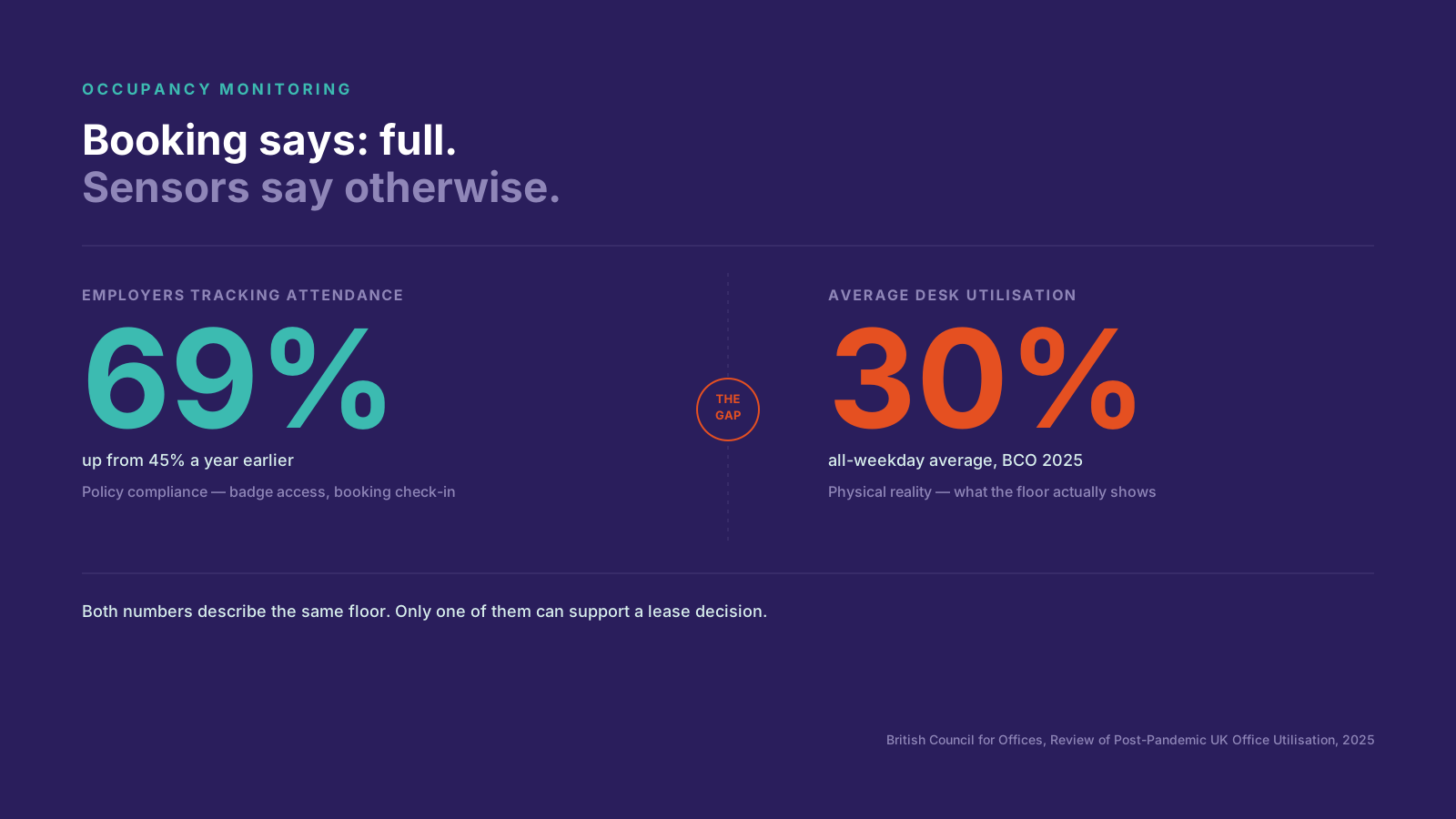
UK office desks are used 30% of the time on an average weekday, according to the British Council for Offices' 2025 benchmark — down from an assumed 80% before the pandemic. Badge access and desk-booking data measure whether staff followed a policy, not whether the floor was actually occupied. The two numbers are not the same.
Every desk on the third floor shows as booked on Tuesday. HR can point to the badge-in numbers and they look healthy — attendance is back to where it was before anyone worked from home three days a week. And yet the AHU is running at full output for a floor where, if you actually walked it at eleven o'clock, a third of the "booked" desks are empty and the meeting room nobody released is dark behind frosted glass.
Booking and badge data measure whether someone followed a policy. Neither one measures whether the floor was actually used. Those are two different numbers, and estates decisions — the ones with a five or ten-year cost attached — are still being made on the first one.
This gap has just become measurable, because the benchmark everyone was estimating against turned out to be wrong.
What the industry has been assuming, and what it just found out
Office attendance is rising. Across the UK, weekly attendance reached 44.2% in mid-February 2026, according to Remit Consulting's tracking of building access data — the highest level recorded since before the pandemic. The proportion of employers tracking attendance has climbed from 45% to 69% year on year, and more than a third are now actively enforcing a policy rather than merely stating one.
None of that tracking tells anyone what the space is actually doing. Attendance and enforcement are policy metrics. They confirm someone walked through a door or checked into a desk booking app. They do not confirm the desk was sat at, the meeting room was used for its booked hour, or the floor needed the HVAC load it was given.
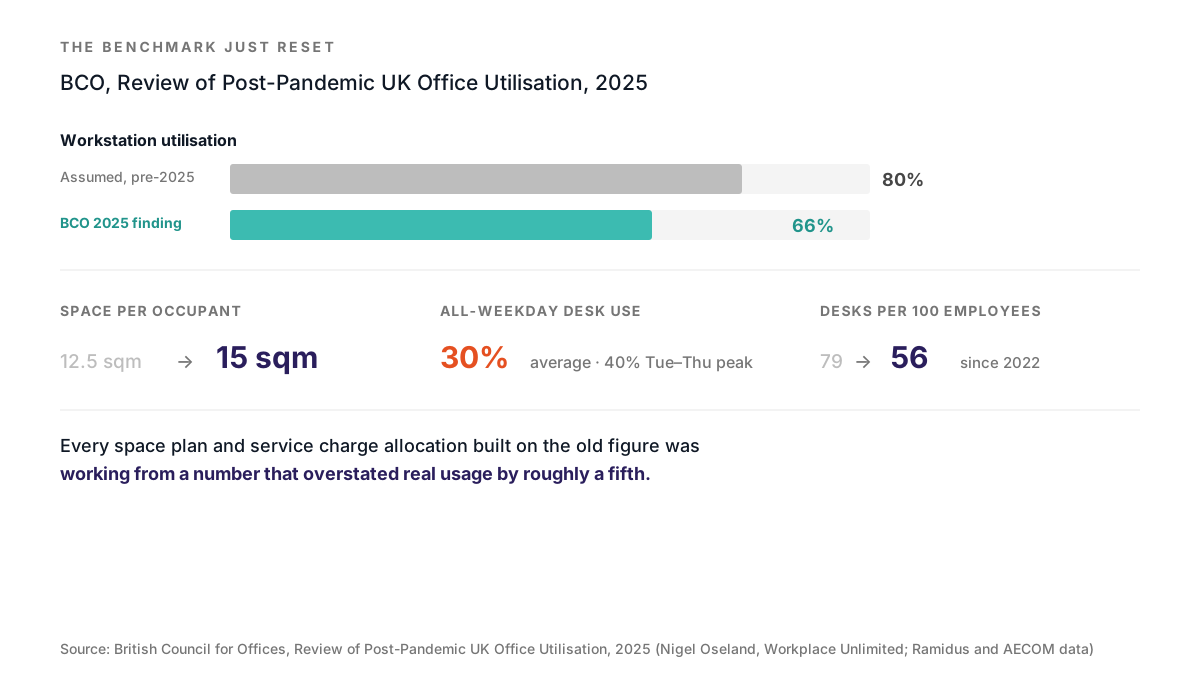
The British Council for Offices' 2025 benchmark report, Review of Post-Pandemic UK Office Utilisation — compiled by Nigel Oseland of Workplace Unlimited from Ramidus and AECOM data — reset the assumption the whole industry had been planning against. Workstation utilisation, long assumed at 80%, is now benchmarked at 66%. All-weekday desk utilisation averages just 30%, with a Tuesday-to-Thursday peak of 40%. Desks per 100 employees have fallen to 56, from 79 in 2022.
That is not a small correction. It means every space plan, service charge allocation and lease decision built on the old 80% figure was working from a number that overstated real usage by roughly a fifth even before booking-data blind spots are added on top.
Outcome: know which desks are actually used, not just booked
The problem it solves. Booking data shows a full floor. Walking the floor shows something else, and nobody has a number for the difference.
What changes:
- Occupancy measured at the desk and the zone, independent of whether a booking was made
- Utilisation reported against the same basis as the BCO benchmark, so your estate can be compared to it honestly
- Booked-but-empty desks and unbooked-but-occupied desks both visible, rather than only the ones somebody logged
The outcome. A utilisation figure that comes from the floor, not from the app people are supposed to use correctly.
Deployment reality: live reporting from day 90 across a multi-site estate.
Solution: Occupancy Monitoring.
Ghost desks, and why booking data cannot see them
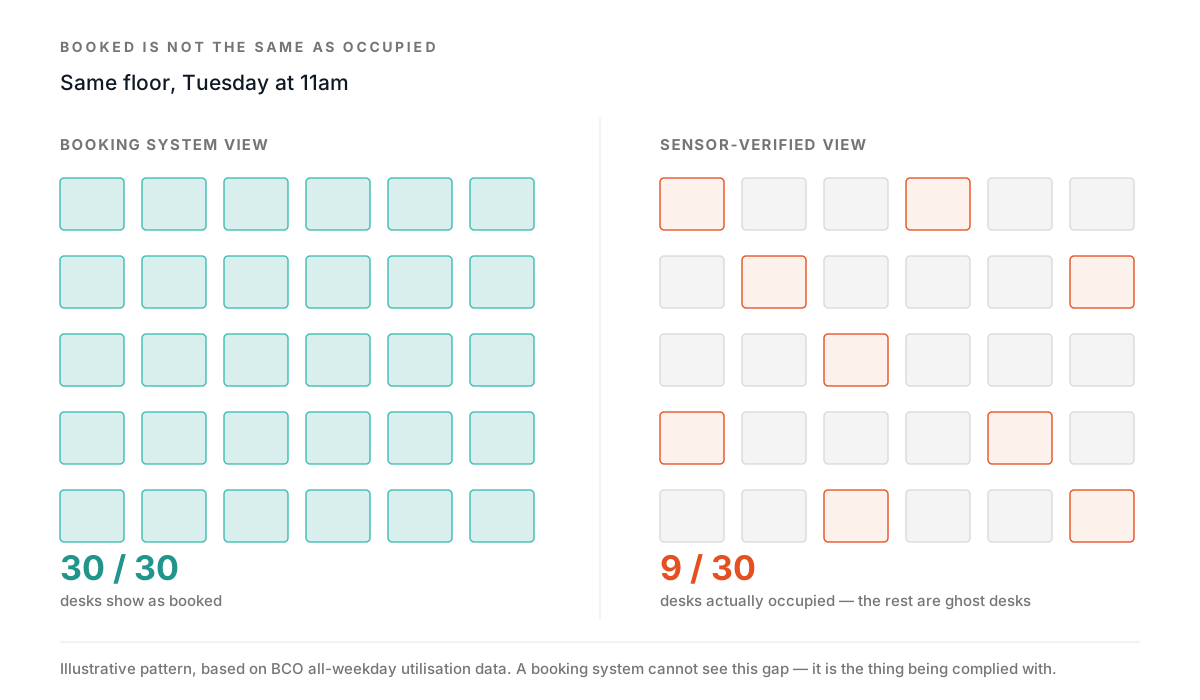
"Ghost desks" — booked but unoccupied — are common enough in post-return-to-office audits that even the vendors selling attendance-tracking tools now name them as a known failure mode. Required office time increased faster than actual attendance did through 2025: policy tightened by roughly 12%, while measured attendance rose by only 1 to 3%. People are complying with the badge-in requirement and not with the intent behind it.
A booking system cannot fix this, because a booking system is the thing being complied with. It cannot flag its own blind spot. The same is true of badge access — it confirms someone entered the building, not which floor, which zone, or which desk they actually used once inside.
This is where the two vendors dominating this conversation — desk-booking and attendance-tracking platforms — structurally cannot follow the argument to its conclusion. Telling a customer their own booking data is unreliable is not a sentence either of those products can afford to publish. It is, however, simply true, and it is the reason a hardware-verified measurement layer sits underneath the booking system rather than replacing it.
Outcome: see the gap between booked and occupied, by zone
The problem it solves. A floor that reads as fully booked and is a third empty at any given hour, with no data source currently positioned to say so.
What changes:
- Independent occupancy sensing overlaid against the booking system's own record
- Ghost-desk and ghost-booking rates reported by floor and by day, not estimated from anecdote
- Peak and trough patterns visible across the week, matching or challenging the Tuesday-to-Thursday assumption for your specific estate
The outcome. A defensible answer to "how full is the building, really" — the question every subsequent space and cost decision depends on.
Deployment reality: across a multi-site estate, device selection and rollout follow the same gated delivery model used on a 335-site, roughly 6,000-sensor deployment.
Solution: Occupancy Monitoring.
From verified occupancy to a defensible space decision
This is where the argument moves from Owen's floor to Fiona's balance sheet. A lease renewal, a service charge negotiation, or a right-sizing decision built on booking data is built on a number that is wrong in a known, admitted direction — toward overstating occupancy, because policy compliance always looks better than physical reality.
Verified occupancy data changes three decisions specifically. It supports a right-sizing conversation ahead of a lease event, backed by a utilisation figure that will survive scrutiny rather than a booking export that will not. It lets HVAC and lighting run to actual occupancy load rather than to policy assumption, cutting energy spend on zones that are heated, lit and ventilated for a headcount that never arrived. And it gives sustainability reporting a real, measured occupancy denominator instead of an assumed one — useful wherever floor-area-based emissions or energy-intensity figures are being reported and someone eventually asks how the area was justified.
None of this requires replacing the booking system. It requires a data layer underneath it that the booking system was never built to provide, integrated into the same estate-wide view as the rest of the portfolio rather than run as a separate point tool.
Outcome: right-size the floor before the lease event, not after
The problem it solves. A lease renewal decision made on the same booking-data assumption that the BCO has just shown to be roughly a fifth too generous.
What changes:
- A verified utilisation baseline in place well ahead of the renewal or break date, not commissioned in response to it
- Service charge and space allocation arguments backed by measured data rather than a booking export
- HVAC and lighting schedules matched to actual occupancy load, zone by zone
The outcome. Reduced lease cost where space genuinely is not needed, and demand-based HVAC savings on the space that remains.
Deployment reality: a validated occupancy baseline at day 60, in time for a renewal decision planned months out.
Solution: Occupancy Monitoring.
Where to start
The useful first step is not switching booking platforms. It is establishing what the floor is actually doing, independent of what anyone has logged about it, before the next lease or service charge conversation is already underway.
Get your IoT audit — thirty minutes, no obligation, and you finish with a scoped occupancy baseline plan for your estate: which floors, which zones, and what the data would need to show before your next renewal date to change the outcome of that conversation.
.avif)